29.01.2025
New impulse relay protects on-board batteries in rail vehicles
LÜTZE TRANSPORTATION, Germany, has expanded its range of impulse relays with a new variant that retains its last switching state without requiring a continuous supply of power. This significantly eases the load on on-board batteries in rail vehicles, especially when the vehicles are parked.
Unlike conventional impulse or bistable relays, which require a constant supply voltage, the new module stores its last switching state mechanically. A brief 100-millisecond control pulse is all it takes to switch the relay, and the selected state remains active even after the on-board power is turned off. This greatly reduces idle power consumption in parked vehicles, easing the burden on both the batteries and the overall energy management system. The new impulse relay features a wide input voltage range from DC 24 to 110 V, making it compatible with all standard on-board voltages in rail applications. The 17.5 mm wide module also includes an automatic power cut-off if the control voltage remains on for too long. If a signal is applied for more than 600 milliseconds, the power supply is automatically interrupted to save energy. The unit has two separate control inputs with different switching thresholds: input A1.2 activates from 13 V for 24 V and 36 V systems, while input A1.1 is designed to switch from 33 V for 72 V and 110 V systems. All relevant railway standards are met, including EN 50155, EN 50121-3-2, EN 50124-1, EN 61373, the fire safety standard EN 45545-2, and the German Federal Railway Authority's EMC directive 06.
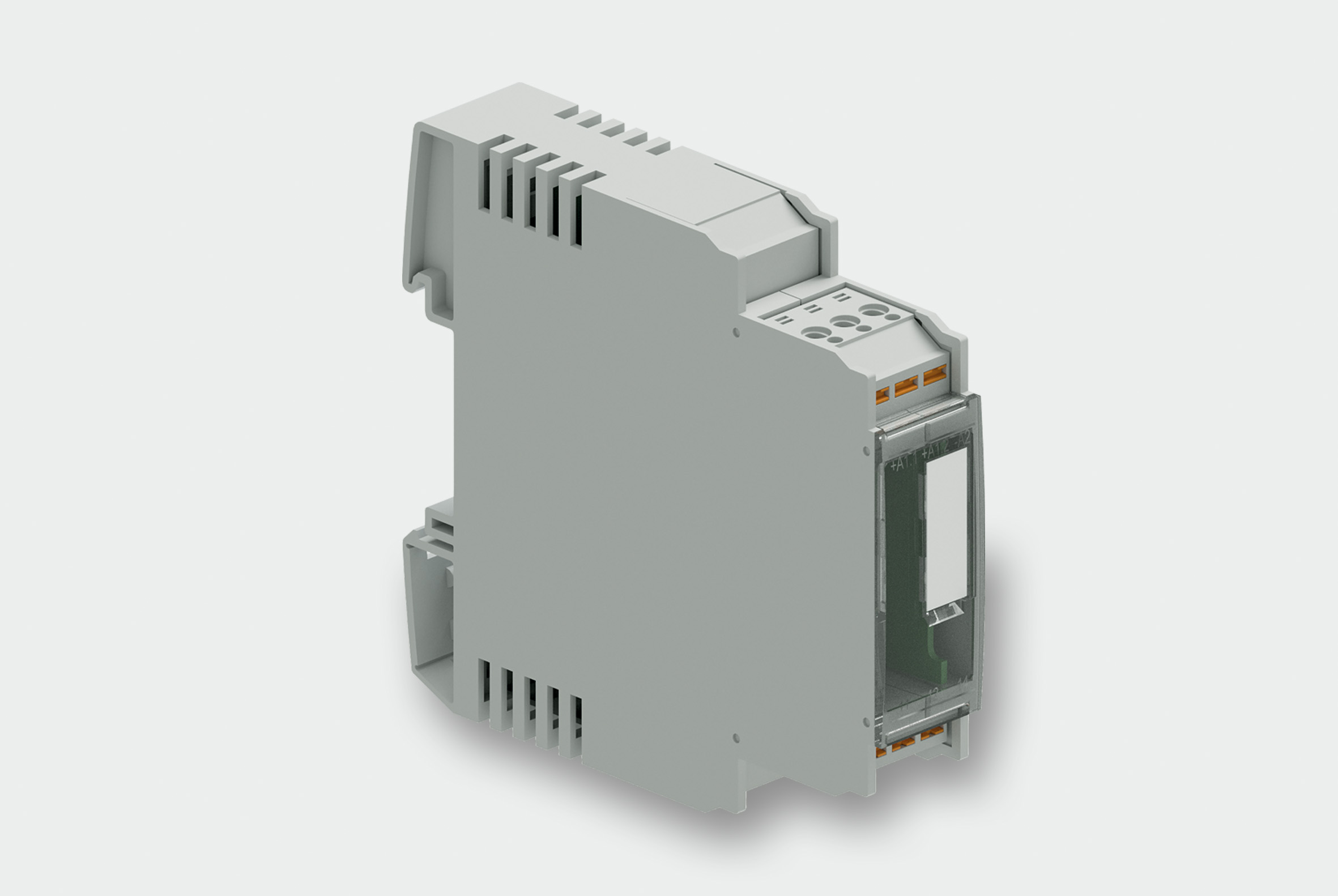
Fig: New impulse relay from LÜTZE TRANSPORTATION helps preserve on-board batteries
| Download Photo |
Background – Impulse relays in railway applications
Impulse relays are commonly used in rail applications for functions like extending and retracting external mirrors or controlling interior lighting. The driver presses a button: one pulse is enough to fold out the mirrors or switch on the lights; a second pulse folds them back in or switches the lights off.
However, a drawback of conventional impulse relays is that they must remain permanently connected to a power supply. If multiple relays are active in a parked vehicle, they can place a significant load on the on-board battery and strain the vehicle’s energy management system.
Characters: 2,318 incl. spaces